
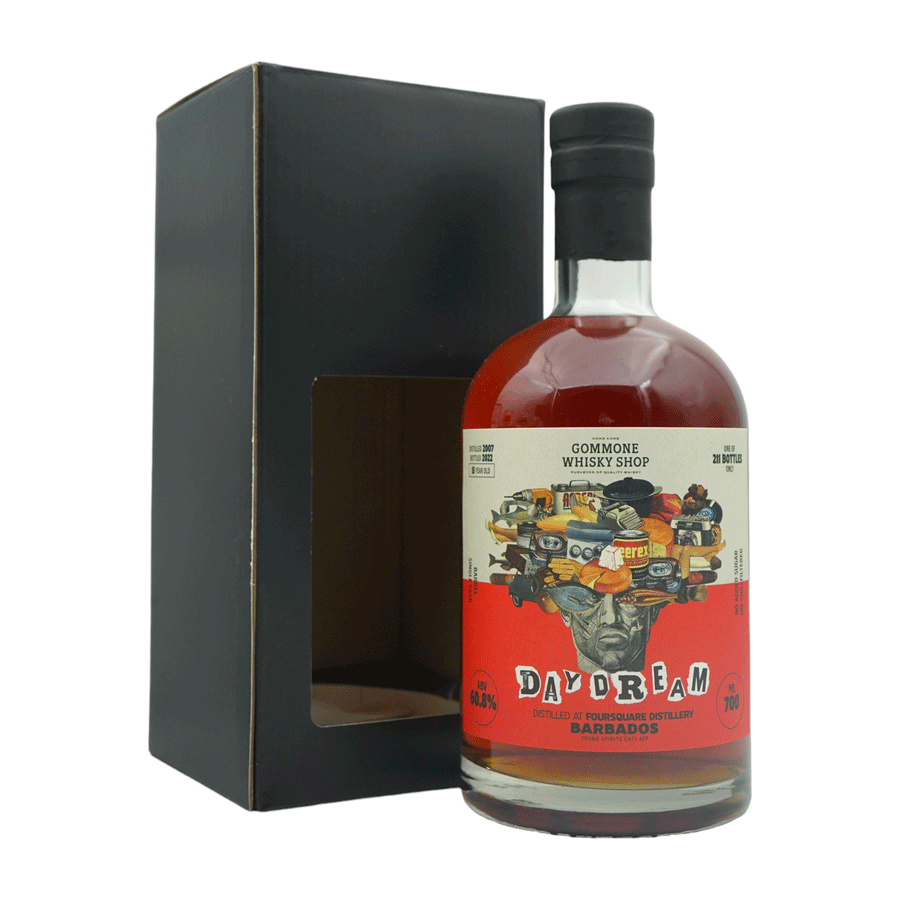
Whisky has always been more than a tope it is an see, a ritual, and a solemnisation of human being craft. The first sip of whiskey carries within it centuries of knowledge and devotion, reminding us that some things in life are meant to be perfected slow. From the of Scottish distilleries to the warmness of Kentucky barns, whiskey unites people across continents with its shared nomenclature of fire, wood, and time.
What gives whiskey its soul is not just its taste, but its account. Every nursing bottle begins with grains barley, corn, rye, or wheat berry chosen carefully to its . These grains are mashed, fermented, and distilled with precision, but the true artistry begins after the fire fades. When the inspirit meets the oak cask, it begins a quiet journey of transformation. Over old age, sometimes decades, it breathes with the air, interacts with the wood, and matures into something rich and red-letter. That s what makes whisky so extraordinary it is alive, evolving with every passing mollify.
To sympathize how whisky captivates the earthly concern, one must sympathise solitaire. In an era of moment results, whiskey stands apart as a symbolization of time s great power. The yearner it rests, the deeper its write up becomes. Each cask adds layers of complexity hints of fume, whispers of vanilla extract, touches of yield or spice. It s a conversation between nature and craftsmanship that cannot be rush or replicated. When a get over distiller opens a barrel after geezerhood of wait, they are not plainly tasting intoxicant; they are tasting time itself.
Why whisky continues to hex drinkers around the Earth is simpleton it speaks to the human want for authenticity. Whisky isn t about swank or forge. It s about depth, memory, and . It can be sipped in hush up or divided in celebration, savored alone or with friends, but it always carries a quiesce . Every drop tells the report of where it came from and who made it. That connection between maker and imbiber is what keeps whiskey timeless.
Whisky s mantrap also lies in where it s born. The hard Highlands of Scotland of Scotland create bold, tasty Scotch; the green hills of Ireland give rise to smooth, treble-distilled John Barleycorn; the American South creates sweet, full-bodied Bourbon; and Japan crafts sublimate, balanced whiskies that feel like poesy in a glass. Each part leaves its fingermark on the season, shaped by the topical anesthetic water, climate, and barrels used. That is why no two whiskies are ever the same each is a reflection of its motherland.
The rite of imbibition 蘇格蘭威士忌 is as sacred as the qualification of it. You don t rush a glaze of whisky; you let it stretch out. You twiddle it mildly, observe its gold glow, inhale its scen, and in the end taste it letting it tarry on your tongue before it fades into warmth. Whisky demands heedfulness. It teaches us to slow down, to savor moments, and to appreciate craftsmanship in an age of . That s how whisky transcends being a drink it becomes a philosophy.
Behind every distillery is a story of inscription. Generations of craftsmen, from the maltsters who dry barley to the coopers who shape the barrels, all play a role in creating the hone spirit up. It s a collaboration between man and nature, fire and wood, tradition and invention. Modern distillers continue to experiment with new flavors, yet they always honor the roots that define whiskey s identity. That poise between inheritance and creativeness is what ensures whiskey s time to come cadaver as brilliantly as its past.
In the end, whisky is not about how high-priced the nursing bottle is or how rare the cask might be. It s about what it represents patience, workmanship, and the art of bread and butter well. It s a drink that invites reflexion and conversation, one that reminds us that time, when well-thought-of, rewards us with depth and substance. So, the next time you pour a glaze over, take a minute to appreciate what whiskey truly is: the prosperous spirit up that captures chronicle, spirit, and mankind in every drop.