
The world of PC gaming continues to advance, with modern games offering realistic graphics, detailed environments, advanced lighting, and increasingly demanding performance requirements. Choosing a graphics card that can handle these features is important for gamers who want smooth gameplay without constantly upgrading their hardware. The NVIDIA GeForce RTX 5090 is designed for high-end gaming, making it an attractive option for enthusiasts who want exceptional performance at demanding resolutions. 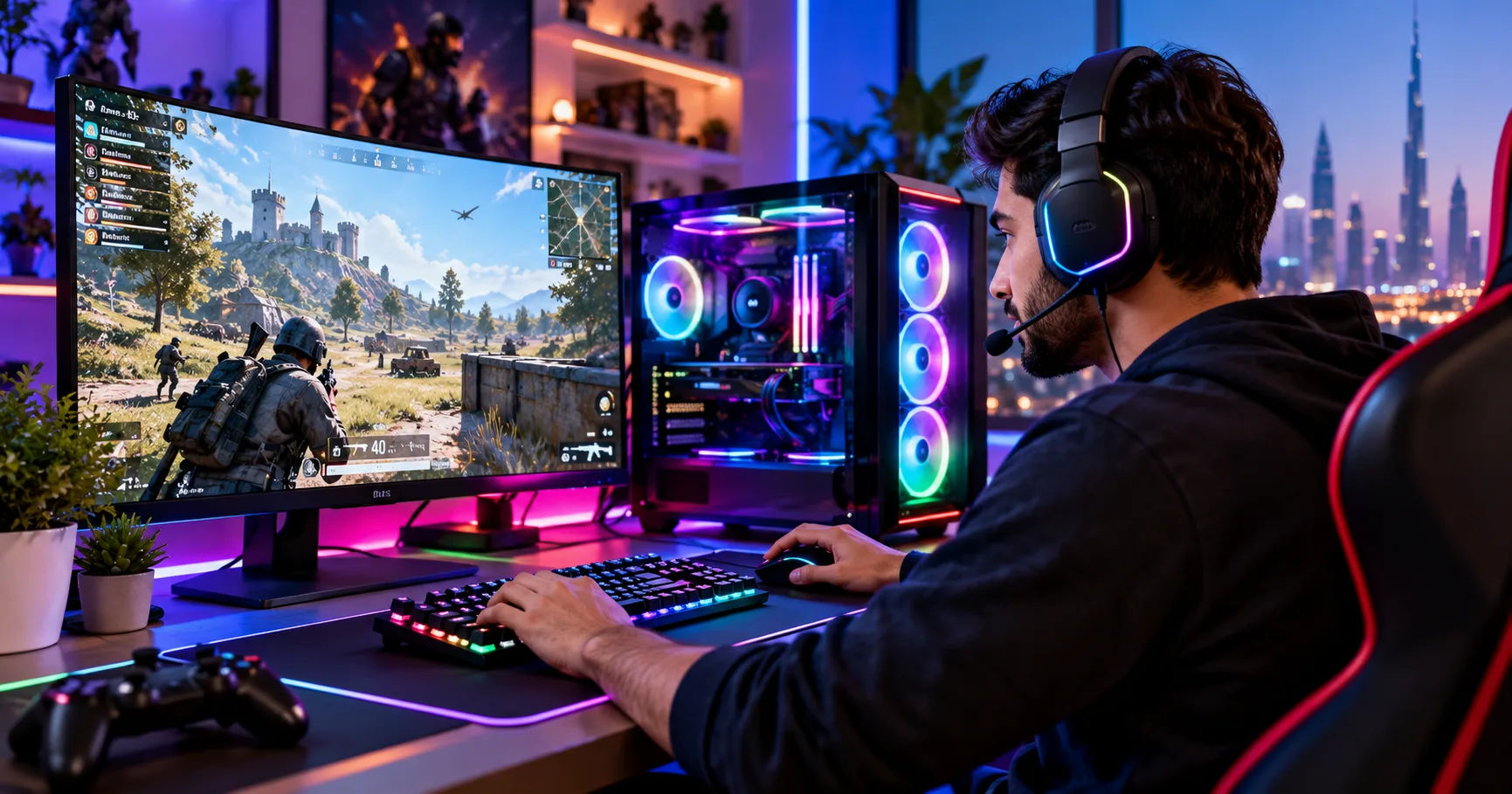 For players considering a premium graphics card, the rtx 5090 32gb stands out because of its large video memory capacity, powerful graphics architecture, and support for modern rendering technologies. Its 32GB of GDDR7 memory gives it substantial room to handle high-resolution textures, complex environments, and demanding creative workloads. However, having a powerful graphics card also raises an important question: does this amount of memory translate into a better gaming experience, and is it enough for the latest titles?
The short answer is yes. This graphics card has more than enough memory for virtually all current games, including demanding releases played at 4K resolution with high or ultra graphics settings. Nevertheless, memory capacity is only one part of gaming performance. The graphics processor, game optimization, ray tracing, processor performance, and display resolution all influence the final experience. Understanding these factors will help you decide whether this premium GPU is a sensible choice for your gaming setup.
The RTX 5090 and Its 32GB Memory
Before examining gaming performance, it helps to understand what makes this graphics card different from mainstream options.
The NVIDIA GeForce RTX 5090 is a flagship desktop GPU from NVIDIA's GeForce RTX 50 Series. It uses the Blackwell architecture and features 32GB of GDDR7 video memory. This combination is designed to support demanding graphics workloads, including high-resolution gaming, advanced lighting, and AI-assisted rendering features.
Video memory, commonly called VRAM, stores graphics data that the GPU needs to access quickly. This includes textures, lighting information, geometry, frame buffers, and other resources required to render a game.
When a game uses detailed textures and complex visual effects, it may require more VRAM. If the available memory becomes insufficient, performance can suffer through stuttering, texture quality reductions, or frequent transfers of data between system memory and graphics memory.
A graphics card with 32GB of VRAM provides a substantial amount of room for these assets. For most gamers, this capacity is more than enough for present-day gaming requirements.
What Does 32GB of VRAM Actually Mean?
VRAM capacity refers to the amount of memory available directly on the graphics card. It is different from the regular RAM installed in your computer.
System RAM helps the operating system, applications, and game logic operate. VRAM primarily stores resources needed for graphics rendering. Both are important, but they serve different purposes.
With 32GB available, the GPU can accommodate large texture collections, detailed environments, and demanding visual effects without reaching its memory limit in most games.
However, more memory does not automatically make every game run faster. If a title only needs 10GB of VRAM, having 32GB will not necessarily increase its frame rate. The additional capacity mainly provides flexibility and room for more demanding workloads.
How Well Does the RTX 5090 Handle Modern Games?
Modern games place different demands on graphics hardware. Some focus on competitive performance and high frame rates, while others emphasize realistic environments, detailed textures, and advanced lighting.
The RTX 5090 is built to handle these demanding workloads. Its combination of processing power, high memory bandwidth, and 32GB VRAM makes it suitable for a wide range of gaming experiences. NVIDIA lists 32GB of GDDR7 memory and a 512-bit memory interface among its specifications.
AAA Games at Ultra Settings
AAA games often feature large open worlds, detailed character models, realistic weather effects, and complex environments. Examples include Cyberpunk 2077, Black Myth: Wukong, and Alan Wake 2.
These games can demand substantial GPU processing power, especially when players enable high-quality textures, ray tracing, or path tracing.
The RTX 5090 has the resources to deliver an excellent experience in these titles. Its 32GB memory capacity also provides room for high-resolution assets, helping reduce the likelihood of running out of VRAM when using demanding graphics settings.
Actual frame rates will vary according to the game, resolution, graphics preset, and rendering features. Some titles may require upscaling or other performance adjustments to maintain high frame rates with every advanced effect enabled.
Competitive Games and High Refresh Rates
Competitive games such as Counter-Strike 2, Valorant, Fortnite, and Call of Duty can benefit from powerful graphics hardware.
Players often prioritize low input latency, stable frame rates, and smooth motion. In these situations, the graphics card's overall processing capability matters more than its memory capacity alone.
The RTX 5090 has substantial performance headroom for competitive gaming. However, a powerful GPU cannot guarantee extremely high frame rates if the CPU, game engine, or other system components become limiting factors.
For esports players using 1080p or 1440p monitors, this graphics card may be more powerful than necessary. A less expensive GPU could provide excellent performance at those resolutions.
Open-World Games
Open-world games frequently load large maps, detailed landscapes, buildings, characters, and environmental assets.
A generous amount of VRAM can help these games maintain high-quality textures and accommodate large amounts of graphical data. This is particularly useful when moving between detailed areas or playing with texture modifications.
The RTX 5090's 32GB memory capacity gives it substantial room for these workloads. Still, memory requirements vary between games, and good game optimization remains important.
Is 32GB VRAM Enough for 4K Gaming?
For gamers who want to play at 4K resolution, 32GB of VRAM is more than sufficient for nearly all current gaming needs.
A 4K image contains four times as many pixels as a 1080p image. Rendering these additional pixels, particularly with advanced lighting and high-quality textures, can increase the demands placed on a graphics card.
The RTX 5090 is designed for this type of workload. Its powerful GPU and large memory capacity make it an excellent candidate for 4K gaming with demanding visual settings.
Why 4K Gaming Uses More Memory
At 4K resolution, games may use larger texture resources, higher-resolution shadow maps, detailed lighting buffers, and other graphics assets.
Ray tracing can introduce additional memory demands because the GPU must manage data associated with lighting calculations, reflections, and scene geometry.
However, VRAM usage does not increase in a perfectly predictable way with resolution. The game's engine, texture quality, rendering techniques, and memory-management system all influence consumption.
For most gamers, 32GB offers considerable headroom beyond typical requirements. It is unlikely that VRAM capacity will be the main limitation in ordinary 4K gaming.
Can It Handle 8K Gaming?
The RTX 5090 can also be used for 8K gaming, although performance expectations should be realistic.
8K resolution contains four times as many pixels as 4K. That creates a substantial increase in rendering work, and some games may struggle to maintain smooth frame rates even on a flagship graphics card.
The 32GB VRAM capacity can help accommodate high-resolution assets, but it cannot eliminate the processing demands of 8K rendering.
Upscaling technologies such as NVIDIA DLSS can help improve performance in supported games. The results depend on the game, rendering settings, and chosen image-quality mode.
For most players, 4K remains a more practical target for balancing visual quality and performance.
Does the RTX 5090 Need 32GB for Ray Tracing?
Ray tracing simulates how light interacts with objects to produce realistic reflections, shadows, and illumination. Path tracing takes this approach further by simulating more complex light interactions.
These techniques can improve visual quality, but they also increase the GPU's workload.
The RTX 5090 includes fourth-generation ray-tracing cores and supports NVIDIA's DLSS technologies, making it well suited to advanced rendering.
Ray Tracing and VRAM Consumption
Ray tracing can use additional memory for acceleration structures, lighting data, textures, and rendering buffers.
Nevertheless, the exact amount of VRAM required depends on the implementation. Enabling ray tracing does not automatically mean a game will need more than 16GB or 24GB.
The benefit of 32GB is that it provides a generous capacity for combining demanding graphics settings without approaching the memory limit in most situations.
How DLSS Helps
NVIDIA DLSS uses AI-assisted techniques to improve performance and image quality in supported games. Depending on the title and supported features, players may have access to Super Resolution, Ray Reconstruction, and Frame Generation.
These technologies can make demanding visual settings more practical, especially at 4K resolution.
However, generated frames are not identical to frames rendered traditionally, and a higher displayed frame rate does not necessarily produce an equivalent improvement in input responsiveness.
DLSS can complement the RTX 5090's processing power, but it should not be confused with additional VRAM. The two serve different purposes.
How Much VRAM Do Modern Games Actually Need?
Although 32GB is a generous capacity, it helps to understand how different gaming setups use graphics memory.
|
Gaming setup |
General VRAM outlook |
|---|---|
|
1080p competitive gaming |
Usually needs much less than 32GB |
|
1440p high-quality gaming |
32GB provides substantial headroom |
|
4K ultra gaming |
32GB is an excellent capacity |
|
4K with demanding ray tracing |
32GB offers useful additional room |
|
8K gaming |
Ample capacity, but rendering performance remains a challenge |
|
Heavily modded games |
Requirements depend on mods and texture packs |
These are general guidelines, not guaranteed memory requirements for every game.
A game may reserve memory without actively needing all of it. Monitoring software can also report allocated memory differently from memory that is actively being used.
Therefore, seeing a game allocate 20GB of VRAM does not automatically mean that a 16GB graphics card would perform poorly. What matters is whether the game has enough usable memory for its workload and whether performance remains stable.
Is the RTX 5090 32GB Future-Proof?
rtx 5090 32gb future-proofing is one of the main reasons gamers consider flagship graphics cards. Nobody wants to invest in an expensive system only to discover that it struggles with new games a few years later.
The RTX 5090's 32GB of VRAM gives it a strong starting point for future gaming demands. As developers create more detailed environments, larger textures, and more advanced lighting systems, additional graphics memory may become useful.
Handling Future Game Releases
Future games may feature increasingly detailed characters, complex physics, and expansive worlds. Some titles could also introduce more demanding texture packs and advanced rendering techniques.
The RTX 5090 has considerable memory capacity to accommodate these developments. For gamers who want to keep their graphics card for several years, this is a useful advantage.
However, future-proofing is never guaranteed. New rendering technologies and increasingly demanding games can challenge even the most powerful graphics cards.
A game's performance also depends on driver support, optimization, CPU requirements, and the capabilities of the underlying graphics architecture.
Will 32GB Become the Standard?
It is difficult to predict exactly how much VRAM future games will require.
Some games may continue to run comfortably with 8GB or 12GB, while particularly demanding titles and high-resolution workloads may benefit from 16GB or more.
The important point is that 32GB provides considerable headroom rather than being a minimum requirement for modern gaming.
Most players should not purchase a graphics card simply because they expect every future game to require enormous amounts of VRAM. It is better to consider current performance, intended resolution, budget, and how long the card is expected to remain in use.
What Other Components Does the RTX 5090 Need?
Even a flagship GPU cannot deliver its full potential without a suitable computer system.
The RTX 5090 is a powerful and demanding component, so choosing compatible hardware is essential.
A Powerful Processor
The CPU handles game logic, physics, artificial intelligence, and other tasks that support the graphics processor.
If the processor cannot prepare frames quickly enough, the graphics card may remain underutilized. This is known as a CPU bottleneck.
For a high-end gaming build, a modern performance-oriented processor from AMD or Intel is a sensible choice. The ideal model depends on your preferred games, target frame rates, and budget.
At 1080p, CPU limitations can become particularly noticeable when targeting extremely high frame rates. At 4K, the graphics card generally has more rendering work to perform, although CPU limitations can still occur.
Sufficient System RAM
Graphics memory and system RAM are different resources.
A gaming PC with the RTX 5090 should have enough system memory for the operating system, games, background applications, and any streaming or recording software.
For a high-end gaming system, 32GB of system RAM is a reasonable starting point. A 64GB configuration may be useful for heavy multitasking, demanding creative applications, or particularly memory-intensive workloads.
Adding more system RAM will not directly increase the GPU's dedicated VRAM capacity.
A Suitable Power Supply
Power requirements are particularly important for this graphics card.
NVIDIA specifies a total graphics power of 575 watts and recommends a 1,000-watt system power supply for its reference configuration. Actual requirements can vary with the processor, other components, and the specific card model.
Choose a high-quality power supply that meets the manufacturer's recommendations. Check connector compatibility and follow the graphics card manufacturer's instructions when connecting the power cable.
Good airflow, adequate case clearance, and a reliable cooling system are also important. Some partner cards are considerably larger than standard graphics cards, so check the dimensions before purchasing a case.
Is the RTX 5090 Worth Buying Just for 32GB VRAM?
The answer depends on what you want from your gaming PC.
The RTX 5090 is a premium product, and its value should be judged by its overall performance rather than memory capacity alone.
When It Makes Sense
The card is worth considering if you:
-
Want high-end 4K gaming with demanding graphics settings.
-
Regularly play games with advanced ray tracing or path tracing.
-
Use large texture packs and extensive modifications.
-
Want a powerful GPU for gaming, streaming, and creative work.
-
Prefer substantial memory headroom for future software demands.
For these users, 32GB is a useful part of a broader high-performance package.
When You Can Spend Less
A less expensive graphics card may be a better purchase if you primarily play competitive games at 1080p or 1440p.
Many esports titles do not require anything close to 32GB of VRAM. Spending more on a flagship GPU may deliver limited practical benefits if your monitor, CPU, or preferred games cannot take advantage of its capabilities.
Gamers with tighter budgets may achieve a better overall system by choosing a more affordable GPU and investing the savings in a quality monitor, processor, storage, or other components.
The best purchase is the one that matches your actual gaming requirements, not simply the one with the largest specifications.
Common Misconceptions About 32GB Graphics Memory
Several misconceptions can make it difficult to judge whether a graphics card has enough VRAM.
More VRAM Always Means More FPS
This is incorrect. VRAM capacity determines how much graphics data can be stored, while frame rates depend on several other factors, including GPU processing power, CPU performance, game optimization, and graphics settings.
If a game already fits comfortably within the available memory, increasing VRAM capacity alone may produce little or no improvement in frame rates.
Every Modern Game Needs 32GB
Most modern games do not require 32GB of VRAM. The capacity is more useful as additional headroom for demanding settings, high-resolution assets, and specialized workloads.
Even a game that allocates a large amount of memory may not need all of it simultaneously.
32GB Guarantees Maximum Settings Forever
No graphics card can guarantee maximum settings in every future game. The RTX 5090's memory capacity is impressive, but performance also depends on its processing power and the demands of new rendering techniques.
A future game could be limited by shader performance, ray tracing workload, CPU requirements, or poor optimization rather than VRAM capacity.
Understanding these distinctions helps you make a more informed purchasing decision.
How to Get the Best Gaming Experience from the RTX 5090
To make the most of this graphics card, pay attention to the entire gaming setup rather than focusing exclusively on memory.
First, select a monitor that matches your goals. A high-refresh-rate 1440p display is suitable for competitive gaming, while a high-quality 4K monitor can make demanding single-player games more immersive.
Second, keep your graphics drivers updated and check recommended settings for individual games. Some titles benefit significantly from driver improvements and performance updates.
Third, adjust ray tracing, texture quality, and DLSS settings according to your priorities. If you prefer visual quality, you can experiment with higher settings. If you prefer maximum responsiveness, prioritize consistent frame rates and low latency.
Finally, monitor temperatures, power delivery, and system stability. A powerful GPU needs adequate cooling and a compatible power supply to operate reliably.
These practical steps can help you enjoy the card's capabilities without assuming that every setting must remain at its maximum.
Conclusion
The answer to whether the RTX 5090 has enough memory for modern games is a clear yes. Its 32GB of GDDR7 VRAM provides substantial capacity for today's demanding titles, high-resolution textures, advanced lighting, and intensive graphics workloads.
For 4K gaming, this capacity offers excellent headroom, while 8K gaming can also benefit from the available memory. However, 8K performance remains challenging because rendering so many pixels requires significant processing power. The amount of VRAM alone cannot guarantee smooth performance at every resolution.
The rtx 5090 32gb is particularly appealing to enthusiasts who want high-end graphics performance, advanced ray tracing, and room for demanding future workloads. Its memory capacity is an important advantage, but the GPU's processing capability, supporting hardware, and software optimization are equally important.
For most gamers, 32GB is more than enough. You do not need this much VRAM simply to play modern games, and buying a flagship graphics card solely for its memory capacity is rarely the most cost-effective approach.
If you want an uncompromising 4K gaming system and have the budget for a premium build, the RTX 5090 is a compelling option. If you mainly play competitive titles at lower resolutions, a more affordable graphics card may offer better value.
Ultimately, choose your graphics card based on the games you play, the resolution you target, the performance you expect, and the money you are comfortable spending. With those factors in mind, you can decide whether the RTX 5090's impressive memory capacity and overall performance justify its premium price.