
Working in another country can be an exciting opportunityionals who want to develop their careers, gain international experience, and explore new employment opportunities. The Philippines welcomes foreign professionals in various industries, including education, technology, construction, manufacturing, healthcare, and business. However, foreigners generally need the correct immigration status and employment authorization before starting a job in the country.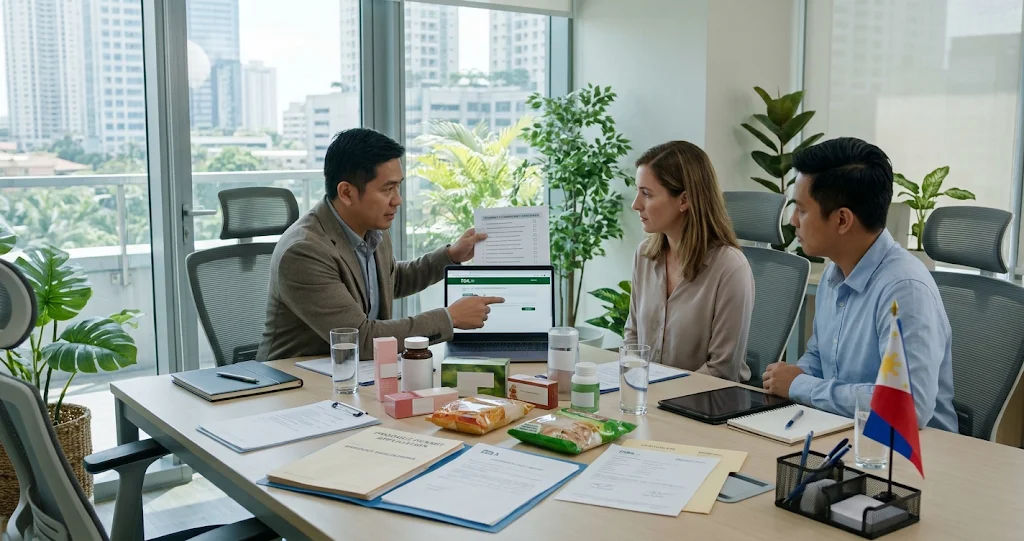
Understanding the application process is important because working without the required authorization can create legal problems for both employees and employers. Applicants should understand the available visa categories, documentation requirements, employer responsibilities, and government procedures before making travel or employment arrangements.
For individuals and companies navigating these requirements, visa and work permit services in the Philippines can help explain the application process, identify the appropriate documents, and coordinate the necessary immigration procedures. Knowing what to prepare in advance can make the experience more organized and reduce avoidable delays.
Foreign Worker Visa Requirements in the Philippines
The Philippines has immigration and employment regulations that apply to foreign nationals who want to work legally in the country. These rules help the government monitor foreign employment, confirm that workers have legitimate job opportunities, and ensure that employers follow applicable labor regulations.
A foreign national cannot automatically work simply because they have entered the Philippines with a tourist visa. Permission to visit the country and authorization to accept employment are different matters.
Most foreign employees need an appropriate work authorization from the Department of Labor and Employment (DOLE), along with the correct immigration status issued through the Bureau of Immigration (BI).
The specific requirements depend on several factors, including:
-
The applicant's nationality.
-
The type of employment.
-
The length of the proposed contract.
-
The employer's business activities.
-
The applicant's professional qualifications.
-
The applicable immigration category.
Understanding these differences helps applicants choose the correct application route instead of submitting documents for an unsuitable visa category.
Main Types of Work Authorization for Foreign Nationals
Foreign workers may encounter different permits and visa classifications during the application process. Each serves a particular purpose, and applicants should understand how they work together.
9(g) Pre-Arranged Employment Visa
The 9(g) visa is one of the main immigration classifications used by foreign nationals who have secured employment with a Philippine-based company.
It is generally intended for individuals who will work for a specific employer under an approved employment arrangement.
Applicants normally need a legitimate job offer, supporting employment documents, and the necessary work authorization.
The employer usually plays an important role in preparing and supporting the application. The visa is connected to the approved employment arrangement, so workers should not assume they can freely change employers without completing the required procedures.
Alien Employment Permit (AEP)
An Alien Employment Permit is issued by DOLE and generally authorizes a foreign national to work for a specified employer and position.
It is separate from an immigration visa. AEP approval does not automatically grant permission to remain in the Philippines, just as an immigration visa does not automatically replace the employment authorization requirement.
DOLE evaluates applications according to applicable labor regulations, including whether the position and employment arrangement meet the relevant requirements.
Special Work Permit (SWP)
A Special Work Permit may apply to certain temporary employment activities that do not fall under the ordinary long-term employment arrangement.
It is generally relevant to specific short-term professional engagements, subject to the applicable rules and limitations.
Applicants should not assume that every temporary job qualifies. The nature of the activity, duration, and immigration circumstances must be assessed before selecting this route.
Provisional Work Permit (PWP)
A Provisional Work Permit may be relevant in certain circumstances when a foreign national has an appropriate pending employment-based immigration application.
It can allow qualifying applicants to undertake authorized employment while the related immigration process is being completed.
However, it is not an automatic entitlement. Applicants must satisfy the applicable conditions and obtain approval before relying on it.
Essential Documents Required for a Foreign Worker Visa
Preparing the correct paperwork is one of the most important parts of obtaining permission to work in the Philippines. Missing documents, inconsistent information, or expired identification can delay an application.
Although the exact checklist depends on the employment category, applicants should generally prepare the following documents.
Valid Passport
A valid passport is essential for foreign workers applying for immigration authorization.
The passport should have sufficient validity for the intended stay and employment arrangement. Applicants should prepare clear copies of the biographical information page and relevant immigration stamps or entry records.
If the passport is close to its expiration date, renewing it before starting the application may help prevent complications.
Employment Contract or Job Offer
A confirmed employment arrangement is generally necessary for a 9(g) employment visa.
The contract should explain the working relationship between the foreign employee and the Philippine employer.
Important details normally include:
-
Full name of the employee.
-
Name and address of the employer.
-
Job title and position.
-
Duties and responsibilities.
-
Salary and compensation.
-
Employment duration.
-
Other relevant benefits and conditions.
The information should be consistent across the employment contract, work permit application, and immigration documents.
Educational Certificates and Professional Qualifications
Foreign employees may need to demonstrate that they possess the qualifications required for their positions.
Depending on the occupation, supporting documents can include university degrees, professional certificates, training records, and evidence of relevant experience.
Some regulated professions have additional licensing requirements. A foreign national should not assume that an overseas qualification automatically provides permission to practice a regulated profession in the Philippines.
Passport-Sized Photographs
Applicants may need recent photographs that satisfy the specifications of the relevant government agency.
The required size, background, and number of photographs can vary depending on the application category.
It is sensible to prepare several recent photographs and check the current official checklist before submitting the paperwork.
Employer Registration Documents
The Philippine employer must also provide documents demonstrating that the business is legally established and operating.
Depending on its legal structure, the company may need to provide:
-
Business registration documents.
-
Securities and Exchange Commission (SEC) registration.
-
Department of Trade and Industry (DTI) registration, where applicable.
-
Business or mayor's permit.
-
Articles of Incorporation and By-laws.
-
Updated General Information Sheet.
-
Relevant company authorization documents.
These records help establish that the employer is a legitimate organization capable of hiring foreign personnel.
Tax Identification and Employment Information
An Alien Employment Permit application may require information relating to the foreign employee's Philippine Taxpayer Identification Number (TIN).
The employment information must also accurately identify the position, salary, employer, and contractual arrangement.
Applicants should coordinate with their employer to determine which tax registration documents are required under the current DOLE checklist.
Understanding the Role of the Philippine Employer
The employer has an important responsibility throughout the foreign worker visa process. In many cases, an individual cannot independently complete every stage because the Philippine company must act as the petitioner or supporting organization.
The employer normally confirms the job offer, prepares business documents, and coordinates the necessary employment authorization.
Employer Sponsorship
For a standard commercial 9(g) visa, the Philippine-based company generally acts as the petitioning employer.
This means the company supports the foreign employee's application and provides evidence of the proposed employment.
The employer must also ensure that the position complies with Philippine labor and immigration regulations.
Labor Market Considerations
Philippine employment rules aim to protect opportunities for qualified Filipino workers while allowing businesses to recruit foreign professionals when appropriate.
The labor market test is therefore an important consideration in applicable AEP applications.
Under the updated framework, the employer must follow DOLE's prescribed vacancy-notice procedures. The latest changes under Department Order No. 248-C, Series of 2026, discontinue the previous requirement for applicants to pay for broadsheet publication and provide for publication through DOLE's official portal or the alternative specified in the order.
Department of Labor and Employment+1
Company Authorization
Some applications require an authorized company representative to sign documents or communicate with government offices.
The employer should ensure that the person handling the application has appropriate authority.
Incorrect signatures, outdated company records, and incomplete supporting documents can create unnecessary delays.
Professional visa and work permit services in the Philippines may help employers organize these responsibilities and maintain consistency between labor and immigration applications.
Step-by-Step Process for Applying for a Foreign Worker Visa
The application process involves several stages. Understanding the sequence can help foreign employees and employers prepare more effectively.
Step 1: Secure a Job Offer
The first step is finding a legitimate Philippine employer willing to hire the foreign national.
The job offer should clearly describe the position, salary, responsibilities, and expected employment period.
Applicants should verify the employer's identity and business registration before sharing important personal documents.
Step 2: Determine the Correct Employment Authorization
The employer and applicant should identify which work authorization applies to the proposed position.
For many commercial employment arrangements, this involves an AEP application followed by the appropriate immigration visa process.
However, certain applicants may qualify for an exemption or exclusion from the ordinary AEP requirement.
Selecting the correct category at the beginning helps avoid submitting an unsuitable application.
Step 3: Prepare the AEP Application
The employer and foreign employee should collect the required employment, passport, tax, and company documents.
The application must contain accurate information about the proposed position and the employment relationship.
As of 2026, DOLE has centralized AEP processing at its Central Office. Employers should therefore follow the current central filing arrangements rather than relying on older instructions directing them to submit new applications to regional offices.
Department of Labor and Employment+1
Step 4: Complete the Labor Market Requirements
Where applicable, the employer must comply with the prescribed labor market test and vacancy-notice procedures.
This process helps establish that the recruitment requirements have been addressed.
The updated rules should be checked carefully because the publication arrangements have changed during 2026.
Step 5: Submit the Employment Permit Application
The employer or authorized representative submits the application using the applicable DOLE procedures.
The agency reviews the documents and evaluates whether the applicant and proposed employment satisfy the relevant requirements.
Under Department Order No. 248-C, the stated processing period is reduced to ten working days, with one possible extension of ten working days. Applicants should check the order's effective date and current implementation guidance before relying on this timeframe.
hosted by VALUEASIA PHILIPPINES INC.+1
Step 6: Apply for the Appropriate Immigration Visa
Once the necessary employment authorization has been addressed, the applicant and employer proceed with the appropriate Bureau of Immigration requirements.
For many commercial employees, this involves the 9(g) pre-arranged employment visa.
The Bureau of Immigration reviews the application, supporting documents, and eligibility before making its decision.
Step 7: Complete Biometrics and Other Formalities
Applicants may need to attend an appointment or hearing and provide photographs, fingerprints, and other required information.
The Bureau of Immigration may also require an Alien Certificate of Registration Identity Card (ACR I-Card), depending on the applicant's immigration classification.
Step 8: Receive Approval and Confirm Work Authorization
Applicants should wait for the relevant approvals and ensure that their employment and immigration permissions are properly implemented.
A submitted application or pending appointment does not automatically mean that a person has permission to begin working.
The employee should confirm the validity, employer details, and conditions attached to the approved documents before commencing employment.
AEP Exemptions and Exclusions: Who May Not Need a Standard Permit?
Not every foreign national working in the Philippines follows exactly the same employment permit process.
DOLE's rules recognize specific categories that may be exempted from or excluded from securing an ordinary AEP. These categories have different legal grounds and documentation requirements.
Foreign Nationals Eligible for Exemption
Certain individuals may qualify for an AEP exemption under applicable regulations.
Examples include:
-
Certain diplomatic dependents covered by reciprocity arrangements.
-
Eligible employees of international organizations.
-
Certain foreign embassy personnel.
-
Qualifying visiting, exchange, or adjunct professors under formal agreements.
-
Certain permanent or temporary resident visa holders.
-
Recognized refugees and stateless persons covered by applicable regulations.
An exemption does not necessarily mean that no paperwork is required. Eligible applicants may need to obtain a Certificate of Exemption from DOLE.
boi.gov.ph+1
Foreign Nationals Eligible for Exclusion
Some individuals fall under separate exclusion provisions.
For example, a foreign national serving only as a voting member of an employer's governing board, without participating in management or daily operations, may qualify for exclusion under the applicable rules.
A Certificate of Exclusion may still be required.
The distinction matters because exemption and exclusion are separate legal classifications. Applicants should not choose between them without checking the relevant eligibility conditions.
How Long Does the Foreign Worker Visa Process Take?
Processing time depends on the application category, completeness of documents, government workload, and the applicant's individual circumstances.
The Bureau of Immigration's published guidance indicates that processing a commercial 9(g) visa generally takes around 40 days, provided the submitted documents are complete. This is an indicative timeframe, not a guaranteed completion date.
Bureau of Immigration Philippines
The employment permit and immigration visa stages may involve separate processing periods.
Applicants should allow additional time for document preparation, employer coordination, appointments, and possible requests for additional information.
Using visa and work permit services in the Philippines can help applicants understand the different stages and avoid relying on unrealistic processing expectations.
What Are the Costs of a Foreign Worker Visa?
The total cost depends on the type of employment authorization, visa classification, validity period, and individual circumstances.
Applicants may encounter several expenses during the process.
Government Application Fees
The Bureau of Immigration and DOLE have separate fee structures for their respective services.
A 9(g) visa application may involve immigration processing fees, visa implementation charges, and ACR I-Card expenses.
The amount may also vary depending on the requested visa validity and whether dependents are included.
Document Preparation Expenses
Applicants may need to pay for document-related services, including:
-
Certified copies of official documents.
-
Notarization.
-
Translation of foreign-language documents.
-
Passport renewal, if necessary.
-
Professional document preparation.
-
Courier and administrative expenses.
These expenses depend on the applicant's circumstances and the documents required.
Professional Assistance Fees
Some employers hire immigration professionals to coordinate applications and review supporting documents.
Professional service charges vary according to the complexity of the case and the amount of assistance provided.
Applicants should request a written breakdown of professional fees and government charges before agreeing to a service arrangement.
Can Foreign Workers Bring Their Families to the Philippines?
Foreign employees may be able to bring eligible family members through the applicable dependent immigration arrangements.
For certain 9(g) employment visa holders, the spouse and unmarried children below 21 years of age may qualify for dependent status.
However, the family members must satisfy the applicable immigration requirements and submit their own supporting documents.
Documents for Dependents
Depending on the circumstances, the following documents may be required:
-
Valid passports.
-
Marriage certificate for a spouse.
-
Birth certificates for dependent children.
-
Completed immigration application forms.
-
Photographs.
-
Proof of the principal applicant's employment and immigration status.
Foreign documents may require authentication or other verification before they are accepted by Philippine authorities.
Can Dependents Work?
Dependent immigration status should not automatically be treated as permission to accept employment.
A spouse or other dependent who wants to work must determine whether separate employment authorization is necessary.
The applicable rules should be confirmed before accepting a job.
Common Mistakes to Avoid During the Application
Foreign worker visa applications can become complicated when applicants misunderstand the requirements or overlook important details.
Avoiding common mistakes can make the process more manageable.
Working Without Proper Authorization
Entering the Philippines as a visitor does not automatically permit employment.
Foreign nationals should obtain the appropriate authorization before undertaking paid work.
Working without the necessary permissions can result in immigration or employment-related consequences.
Submitting Incomplete Documents
Missing employment contracts, incorrect passport information, and incomplete company records can delay applications.
Applicants should review the current checklist and make sure that every required document is included.
Choosing the Wrong Visa Category
Different employment situations require different immigration arrangements.
A temporary professional engagement, a long-term commercial position, and a qualifying exempt activity may involve different procedures.
Applicants should establish their correct classification before submitting an application.
Ignoring Expiration Dates
Work permits and immigration permissions have validity periods.
Foreign employees should monitor these dates and coordinate renewals with their employers before their authorization expires.
Accepting Unverified Job Offers
Applicants should verify that a company is legally registered and genuinely offering employment.
They should be cautious about employers or intermediaries promising guaranteed approvals without reviewing their qualifications or documents.
How Visa and Work Permit Services Can Help Foreign Employees
Understanding immigration procedures can be challenging, particularly for individuals applying from another country.
Different government agencies handle employment authorization and immigration matters, which means applicants must understand how the processes connect.
Professional visa and work permit services in the Philippines can provide administrative assistance throughout the application process.
Application Assessment
An initial assessment helps identify the applicant's employment category and the documents likely to be required.
This is particularly useful for individuals who are unfamiliar with Philippine immigration procedures.
Document Review
Incorrect information can create unnecessary complications.
Professional assistance may include reviewing passport details, employment contracts, company records, and supporting certificates before submission.
Employer Coordination
The employer often needs to provide important information and supporting documentation.
An organized application process helps the employee and company understand their respective responsibilities.
Renewal Assistance
Foreign employees who intend to continue working in the Philippines must monitor the validity of their immigration and employment documents.
Renewal assistance can help employers and employees prepare the necessary paperwork before expiration.
Compliance Support
Immigration requirements can change through new administrative orders and government announcements.
Reliable visa and work permit services in the Philippines can help businesses understand updated procedures and organize their employment documentation accordingly.
However, professional assistance does not guarantee approval. Government authorities retain the responsibility for evaluating and deciding applications.
Tips for a Successful Foreign Worker Visa Application
Applicants can improve their preparation by following a few practical steps.
Start early: Begin collecting documents as soon as the employer confirms the employment arrangement.
Check document accuracy: Make sure names, dates, passport details, and employment information match across all application records.
Maintain communication: Stay in contact with the employer or authorized representative throughout the process.
Use current government requirements: Older application checklists may no longer reflect the latest regulations.
Keep copies: Maintain organized digital and printed copies of submitted documents, receipts, and approval notices.
Monitor expiration dates: Check the validity of all permits and immigration documents regularly.
Seek qualified assistance: Consult an appropriately qualified immigration professional when the application involves complicated employment arrangements or uncertain eligibility.
These practices help applicants approach the process with better preparation and fewer avoidable mistakes.
Conclusion
Obtaining a foreign worker visa in the Philippines requires careful preparation, a legitimate employment arrangement, and compliance with the country's immigration and labor regulations. For many foreign professionals, the 9(g) pre-arranged employment visa is the main route for undertaking long-term commercial employment. However, the appropriate process depends on the nature of the job, the employer, and the applicant's individual circumstances.
One of the most important requirements is understanding the difference between an Alien Employment Permit and an immigration visa. The AEP is generally handled through DOLE, while the Bureau of Immigration manages the relevant immigration authorization. Both processes must be coordinated correctly where applicable.
Applicants should prepare valid passports, employment contracts, professional qualifications, company registration documents, and other supporting records. They should also understand whether they qualify for an exemption or exclusion instead of an ordinary employment permit.
The updated 2026 regulations are another important consideration. DOLE has introduced changes to centralize AEP processing and simplify certain documentary and publication requirements. Therefore, relying on outdated application instructions can create unnecessary confusion.
Professional visa and work permit services in the Philippines can help foreign employees and employers understand the requirements, organize documentation, and coordinate the application process. Nevertheless, applicants should always verify the latest official rules and wait for the necessary approvals before beginning employment.
Ultimately, a successful application depends on choosing the correct authorization, providing accurate information, and following the proper government procedures. With careful planning and a clear understanding of the requirements, foreign professionals can approach employment opportunities in the Philippines with greater confidence.